Before You Apply for an SME Loan: Can the Business Carry the Repayments?
Define the funding gap, map customer receipts and test repayments against a slower month before applying. Confirm current lender requirements and written terms.
Key Takeaways
- Explain the funding purpose and timing before choosing an amount.
- Test repayments against actual cash receipts, including delayed customer payments.
- Prepare consistent records; confirm the lender’s own document requirements.
- EFS scheme support does not waive repayment responsibility or guarantee approval.
- Compare the full written commitment, not only the advertised rate or monthly payment.
A new contract arrives, and borrowing suddenly feels like the natural next step. Suppliers need paying now, while your customer will pay later. The opportunity may be a good one. The question worth sitting with is a simple one: can the business comfortably carry the repayments while it waits for that money to come in?
Before you apply for an SME loan in Singapore, it helps to be clear on three things: what the funds will pay for, when cash will come back, and how the repayment holds up in a slower month. With those answers in hand, the lender conversation becomes much easier, and the decision becomes yours rather than the bank's.
Start with the gap the money must close
"Working capital" is a useful label, but it rarely tells the whole story. Try writing down the amount you need, the expense it covers and the date you expect that spending to turn back into cash. Paying for stock against a confirmed order is a very different situation from covering a shortfall that returns every month.
Imagine a supplier who needs payment this month for materials on a job your customer will settle in 90 days. When is that customer likely to pay, and what could slow them down? Which bills fall due in the meantime? Thinking this through early shows you how payroll, rent and existing repayments would be covered, without counting the same cash twice.
If the gap keeps coming back, it is worth looking gently at margins, payment terms and operating costs first. A loan can give you breathing room, but it also adds a commitment. Understanding why the gap exists will serve you better than picking a loan amount from the bank balance alone.
Profit is only part of the repayment picture
Many profitable businesses still feel a cash squeeze when invoices sit unpaid. A practical way to see this is to lay out your actual receipts and payments month by month, then place the proposed instalments on that timeline alongside existing debts and planned spending.
Suppose your business usually has S$5,000 left after its monthly commitments, and you are considering a new S$2,000 instalment. On paper, a S$3,000 buffer looks comfortable. Now picture your largest customer paying 60 days late. Rework those months using the cash you would really have. If the plan only works when everyone pays on time, that is a gentle signal to adjust the amount, the timing or the terms before you commit.
This exercise will not predict approval, and it is not meant to. Its value is in showing you where the business could feel stretched, something a larger approved amount would not fix on its own.
Prepare records that tell your business's story
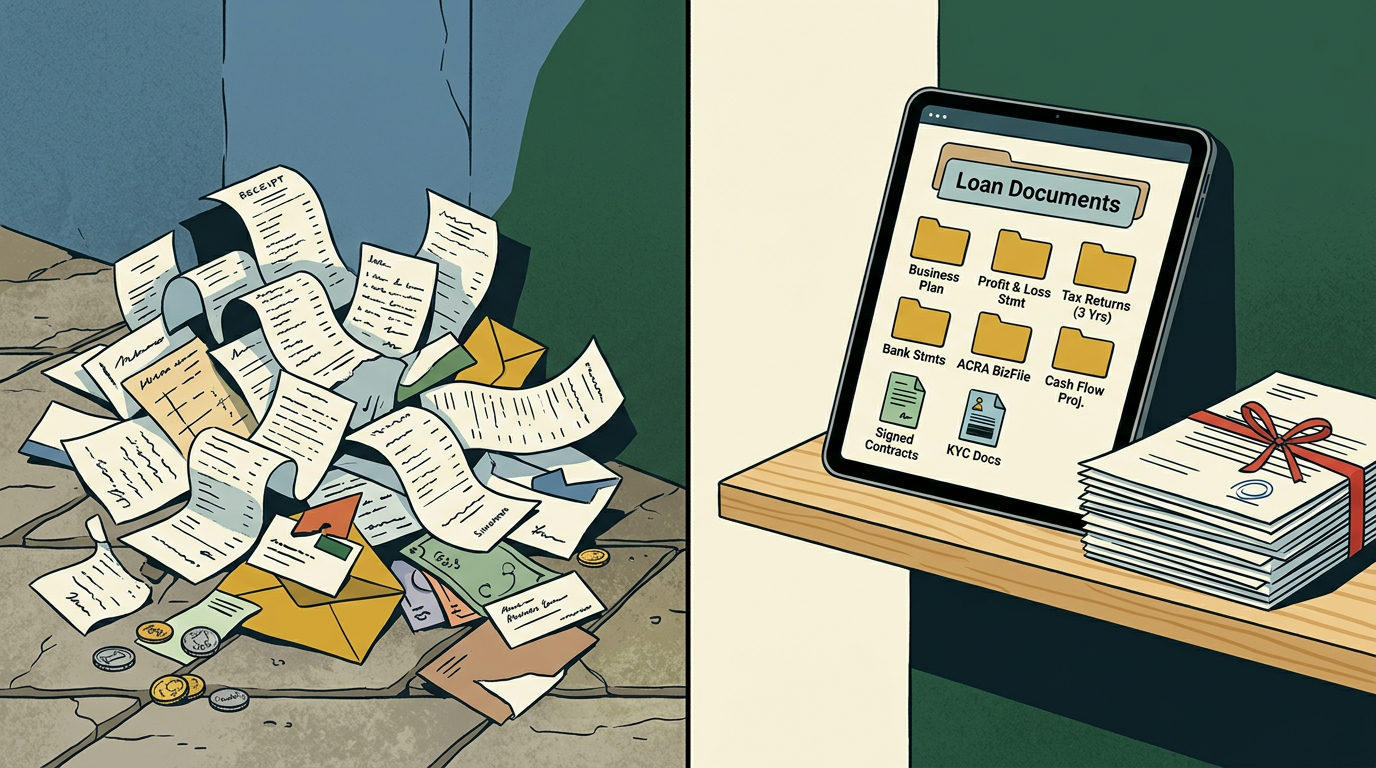
Your profit and loss statement shows revenue and expenses over a period. Your balance sheet shows what the business owns and owes at a point in time. Your bank statements show how cash actually moves. Read together, they tell a lender how your business works, so it helps to be ready to explain any unusual transactions or overdue customer balances openly.
Check that company details and reporting periods line up across documents, and keep the contract, invoice or purchase order behind the funding need close at hand. It also helps to show clearly which work is confirmed and which is still projected.
Document requirements differ by lender and application route, so confirm the current list with the bank you choose.
Scheme support does not remove repayment responsibility
Government-supported financing can make a loan easier to obtain, but it does not change who repays it. Enterprise Singapore states that borrowers under the EFS SME Working Capital Loan remain responsible for repaying 100% of the loan, and approval is subject to the participating financial institution's assessment.
So a scheme is a good starting point for exploring options, but it does not by itself mean your company qualifies, or that the borrowing is affordable for your business.
Compare the commitment, not just the advertised rate
When an offer arrives, ask for it in writing along with the repayment schedule. Look at the actual instalments, total interest, fees, repayment dates and any early-repayment conditions. It is also worth asking whether security or a personal guarantee applies, so you understand the full obligation before signing.
A lower monthly payment can feel reassuring, yet a longer term may cost more overall. Comparing total cost across the term, and checking the first payment date against when you expect money to come in, often reveals which offer genuinely suits the business.
Notes from Henry's Desk
- Write down what the money pays for and when it comes back before choosing an amount.
- Test the repayment against a slow month, including a customer who pays 60 days late.
- Keep your records consistent, and confirm each lender's own document list.
- Treat scheme support as a helpful option, not a substitute for affordability.
- Compare the full written commitment, not only the rate or the monthly payment.
If you would like a second pair of eyes on your plan before speaking to a lender, a short conversation with Henry can help you test it calmly.